Ten Personal Finance Pieces Of Advice Everyone Should Know In 2027
It’s never been easy The current landscape of 2026/27 will present a particular set of challenges and opportunities. Inflation, a shift in interest rates as well as evolving employment markets and the rapid development of new financial tools have changed the setting in which people make their financial choices. The basics, however, remain consistent. You may be just beginning to make a commitment to money or you want to sharpen the habits you have The following 10 personal finance strategies provide a solid starting of any person who wishes to make money work harder.
1. Set Up An Emergency Fund In The Beginning Before Anything Else
Every credible piece of financial advise eventually comes back to this. Before investing, before aggressively in reducing debt, prior any other activity, you require the protection of a financial buffer. A minimum of three to six months’ costs of living in the savings account can provide insurance against loss of employment, unexpected expenses and the types of perturbations that can destroy even the most meticulously laid financial plans. Without this foundation, one bad month can cause a reversal of years of growth elsewhere. It’s not the most exciting use of money, but it’s the most vital one.
2. Be aware of where your Money Actually Goes
The majority of people have an approximate understanding of their incomes, but aren’t able to draw a clear picture of their spending. Spending tracking, even for the duration of a single month, leads to reveal patterns that are truly shocking. Subscription services accumulate quietly. Food expenditure is often underestimated. Everyday purchases can add up faster than what your gut instinct suggests. Before you can create any financial plan, it is important to establish a solid baseline. Budgeting apps have made this simpler than ever but a simple spreadsheet is equally effective should you be prepared to use it consistently.
3. Deal with high-interest debts as a Priority
A high-interest credit, particularly those on credit accounts, constitutes among of the most expensive money-making habits. The interest rates for revolving credit can reach twenty percent or more each year. This means that every month that the balance sits unpaid, the underlying problem compounds. It is possible to pay off high-interest debt and receive a guarantee of return comparable to the rate at which interest is assessed, which can be higher than every other investment option that is available with the same risk. If there are multiple debts in play You can use either the avalanche or snowball method and focusing on the lowest rate first or the snowball method eliminating the least amount prior to gaining psychological momentum can offer a structure that is able to be used.
4. Start investing early and stay Consistent
The principles of compound growth will reward you for time more than anything else. If you invest money consistently over a long time period yields outcomes that can be compared to larger amounts spent later, even though the returns aren’t as high. The idea of waiting until your finances are comfortable enough to commit to investing a risk, as that threshold doesn’t always happen without a delay. Begin small and remain consistent, even through periods that are volatile, can help build both financial gains and the discipline that allows for long-term wealth accumulation. Index funds and low-cost diversified portfolios are the most reliable starting point for most people.
5. Maximise Tax-Advantaged Accounts
The majority of countries provide some kind in tax-advantaged savings or an investment vehicle, be it a pension or ISA, an ISA, a 401(k), or something else similar. These accounts are created to help reduce the tax burden on long-term savings. However, not using them to the fullest extent is leaving money on table. Employer pensions, if made available, are a fast and guaranteed yield on contributions that no investment will match. Knowing what’s available in the tax jurisdiction you reside in and utilizing those accounts to the limits they allow before investing into taxable accounts is one of the highest-leverage financial decisions most people make.
6. Guard Your Money With Adequate Insurance
Financial planning is primarily focused on making money, but preserving your assets is equally vital. Life insurance, income protection cover and critical illness policies tend to be undervalued until moment they’re required. If your family is dependent on their income the financial consequences of being disabled due to injuries or illness can become catastrophic if no proper coverage is available. Reviewing insurance needs regularly especially following major life events, such as the birth of children or taking on the mortgage, is a routine, but frequently overlooked measure in financial planning that is sound.
7. Make a conscious decision about the impact of lifestyle inflation
When income grows, spending will increase in tandem ofttimes unconsciously. Renovating vehicles, accommodations, the holidays, as well as everyday habits closely with earnings growth is one of the main motives why people are able to reach middle years with a high income however limited financial security. Being aware of which features really add value and which are merely the quickest way to get there can be a habit that separates those who accumulate wealth in the course of several years and feel that they have earned enough but do not feel they are getting enough.
8. Diversify income where you can.
Relying on a single income source can pose more risk than it once did in a labour market that continues to develop rapidly. Achieving additional income streams whether it’s through freelance work an investment or side business income, or even monetising a technique, will provide both an extra financial buffer as well as longer-term possibility of earning. This does not require drastic changes or a huge expense to start. Many secondary income streams that are worthwhile begin as simple side projects that grow gradually. The point is to reduce the risk that is associated with any single source of financial ruin.
9. Review and negotiate recurring Costs Frequently
Fixed monthly expenses like insurance premiums, utility bills the mortgage rate, and subscription services rarely are optimised by computer. Providers generally reserve their best rates for new customers. This means loyalty is often punished rather than and rewarded. It is important to review all major expenses every year and negotiating or shopping around whenever possible results in meaningful savings with relatively little effort. The savings gained are not exactly spectacular on a month-by -month schedule, but if redirected over time it adds up to something important over time.
10. Educate Yourself Continuously
Financial literacy isn’t something that can be checked once. Tax rules change, new products appear, economic conditions shift, and individual circumstances change. People who stay financially informed take better decisions with greater consistency than those who subcontract their financial knowledge entirely to financial advisors or rely solely on prior knowledge. This does not require profound expertise. A lot of reading, asking the right questions and having a fundamental understanding of how tax, investing, debt and tax are interconnected is enough to avoid the most costly mistakes and maximize the opportunities offered.
Good personal financial management is more about not chasing down clever shortcuts and more about using only a few sound principles consistently over a long time. The advice above will To find further context, explore some of these respected For more detail, head to some of these trusted nordkurier24.de/ for more context.
Top 10 Workplace Developments For A Changing Job Market In 2027
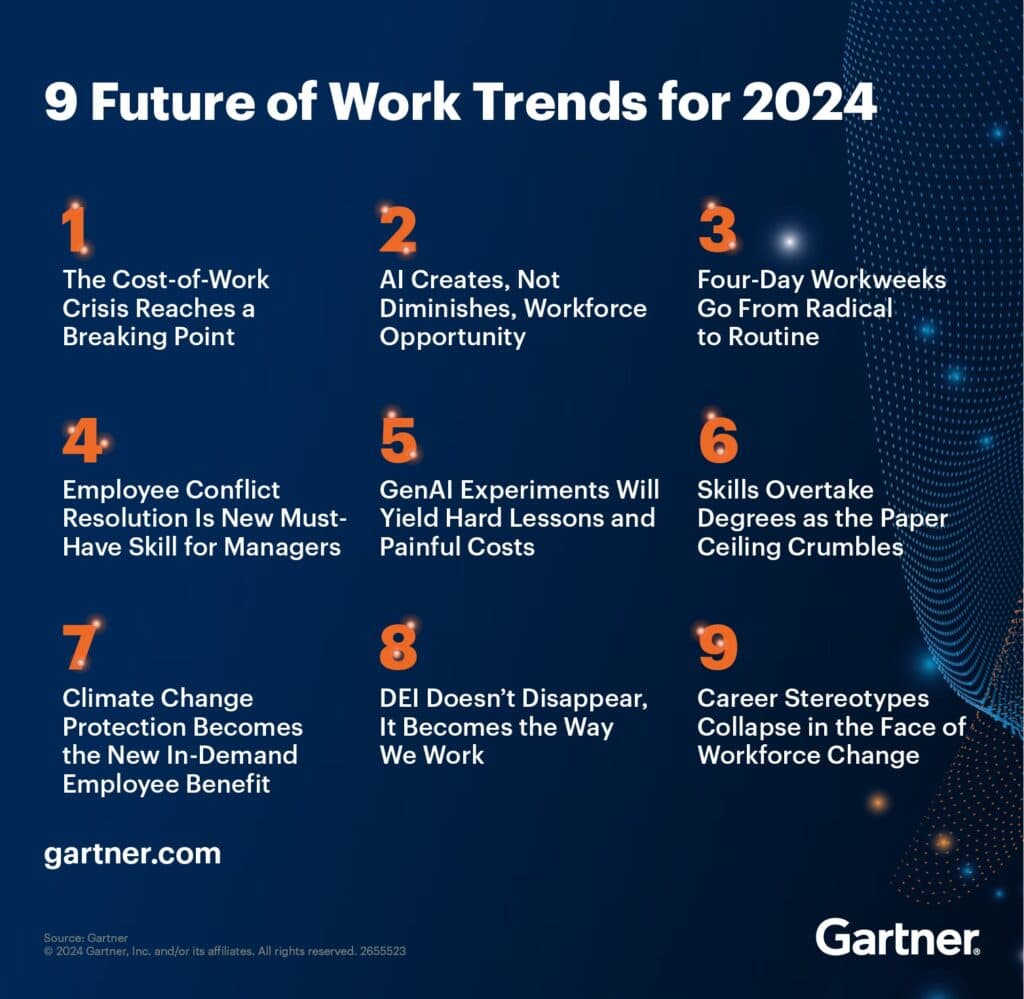
The job market is currently undergoing one of the biggest changes in the last few years. Automation and artificial intelligence are reshaping which tasks require human involvement and which do not. The geographic distribution of work has been altered by hybrid models and remote working which have loosened the connection between employment and geography in ways that’s continuing to play out. Skills employers value are shifting faster than education institutions can reflect. The relationship between people and organisations is evolving away from the long-term mutual commitment model towards something that is which is more flexible, more managed and more dependent upon constant evidence of value. Here are the top ten career improvement trends that are influencing the changing employment market in 2026/27.
1. AI Literacy Becomes A Universal Professional Requirement
Effectively working alongside AI tools is quickly becoming a standard expectation for professionals across all industries rather than a specialized skill that is confined to tech-related roles. Knowing the capabilities of AI, what AI can but not reliably accomplish or effectively, how to formulate effective workflows and prompts as well as how to critically evaluate the outputs of AI and how to implement AI tools into your professional practices effectively are all skills employers are increasingly recognizing as essential and not optional. The best professionals are not necessarily those who comprehend AI more deeply on a technical level, but rather professionals who are able to blend their domain expertise with the practical capability of using AI tools effectively in the field they work in.
2. Skills-Based Hiring is a better alternative to Credential-Based Selection
A growing number of employers are shifting away from using credentials for education as their primary criteria for hiring decisions to rely on actual skills and abilities. The recognition that a degree obtained from a particular institution is a less accurate indicator of the capabilities that a job requires is driving investments in skills assessments including portfolio-based hire, work samples, and competency frameworks to assess what candidates are able to do instead of the qualifications they have. This is for individuals. It’s both an opportunity as well as a responsibility: the opportunity to stand out on the basis of proven ability regardless of academic background and the duty to build and maintain that capability over time.
3. A Half-Life Of Skills Shortens Dramatically
The rate that specific technical abilities become obsolete is speeding up, primarily driven by the speed of AI development, but also the broader velocity of change across different industries. Skills that were competitive when they were in use five years ago are standard requirements today, while skills that are considered cutting-edge may be replaced or automated in an identical time frame. This is leading to a significant change in how career advancement needs to be approached, changing from a system of acquiring some sort of fixed expertise and then trading it off for decades, to a process of continual learning, periodic assessments of skill levels, and moving ahead of the way demand changes rather than where it was.
4. Portfolio Careers And Non-Linear Paths In the Mainstream
The notion one can have a linear career moving through a single company or even a single area beginning at the entry level and ending at retirement does not reflect the way in which most people’s lives unfold, and it is gradually losing its appeal as the ideal for a career. Portfolio careers that combine multiple sources of income, freelancing alongside employment, serial shifts between various fields, and extended breaks for learning and caregiving or personal progress are becoming more and more common and are being accepted more as a result of the fact that employers have learned to read diverse career histories as proof of apprehension rather than insecurity. The ability to create a coherent story that connects diverse experience is becoming a key professional communication skill.
5. Remote And Distributed Work Reshapes Career Geography
The geographical restrictions regarding career progression have been eased considerably for jobs that can perform remotely, and these implications aren’t fully settling. Professionals in smaller cities and regions can now be able to work in roles and jobs that require relocation. Talent markets have become more competitive because employers can now hire international rather than locally to fill many jobs. The benefits to a career that come from being physically present in large professional hubs has diminished for some job roles, but remain significant for certain roles. It is a challenge to navigate career opportunities in a diverse world, deciding if proximity matters and when it is not and how to keep access to advancement and visibility in the context of distributed organizations, is a crucial and innovative professional skill.
6. Personal Branding Grows From a Optional to Essential
Professionals’ visibility, abilities, perspectives as well as track record outside the borders of their current employers has grown to be a powerful career advantage in ways that were just the few remaining in previous generations. The process of building a reputation as a professional through the creation of content and public speaking, community participation, and active involvement in professional networks provides both protection against changing organisational structures and flexibility that only internal career improvement does not. This does not mean you have to become the next social media star. The trick is to build enough external awareness that relevant opportunities such as collaborations, opportunities, and connections will be available to you independent of any single employer is becoming more common guidelines rather than an extra feature for those who are notably ambitious.
7. Human Skills Command is a must
As AI undertakes more cognitive tasks that previously required human expertise, the capacities that are still uniquely human will be rewarded with a rising value on the labour market. Emotional intelligence, the ability to be able to perceive, manage and effectively respond to emotions on behalf of others as well as oneself, is one of the consistently acknowledged differentiators in the roles that require supervision, client relations negotiation, team management and sophisticated communication. Flexibility, shrewdness abilities to work through uncertainties, and to build genuine trust are all skills that AI can enhance rather than copy. Professionals who can combine a strong technical or domain expertise in conjunction with human expertise are now in the most secure part in the employment market.
8. The well-being and psychological safety of the population are becoming Retention Imperatives
The factors that drive talent decisions have been shifting significantly towards improving the quality of work environment, the psychological security of employees, the performance of management, as well as the degree to which work reflects the values of each individual. Compensation is still important, but it’s often not enough as a retention tool for the professional who are the most sought-after. Companies that put their money into genuine wellbeing, in management quality and in a culture where employees feel comfortable contributing fully and express their concerns without fear they are always ahead of those that rely on financial incentives alone. For individuals, looking at the psychological surrounding of an employer in the same way as applying in assessing compensation and career progression is now standard advice for career advancement.
9. Mentorship And Sponsorship Gain Renewed Relevance
In an environment of career advancement marked by constant shifts, it is important to have relationships with experienced professionals who offer perspective and advocacy as well as access to opportunities that are not publically visible has increased instead of diminished. Mentorship, in which a more skilled professional imparts knowledge in direction, as well sponsors in which a senior champion actively assists in opening doors and puts their confidence in someone’s growth as well as sponsorship, are both gaining renewed attention as career advancement instruments. Reverse mentorship, where more junior professionals share expertise in areas such as technology, social platforms, and emerging cultural trends with senior colleagues, is also growing as a valuable and relationship-building practice that benefits both parties.
10. Relevance and purpose drive Career Decisions For A Growing Generation
A significant proportion of the workforce making career decisions heavily driven by the desire for fulfilling work, a connection between personal values and the organizational mission and a belief that their professional contribution matters above the company’s commercial success is rising. This is evident most strongly among people in their 20s but it’s also not restricted to them. Organisations that provide genuine reasons for being, as well as conditions for competition, and that are able to demonstrate the integrity of their mission statements instead of just stating them, have a greater chance of attracting and retaining the people most likely to contribute to their mission. The connection between purpose and career isn’t without its challenges but the direction that they the future of work is towards a workforce who is looking for more than just a transaction, and is increasingly willing to select actions that mirror that expectation.
The development of careers in 2026/27 requires increased engagement, continual learning, as well as more focused self-direction than at many before in the evolution of work. The trends above do not make the process of moving forward easy however they make it much clearer. People who understand where the value is evolving and invest in capabilities that are uniquely human Develop visible expertise as well as view their career as ongoing tasks rather than fixed arrangements will find greater opportunities in this environment more than worry. The job market is changing quickly, but it’s not just changing in a random manner. We have a path, and those who orient toward it at an early stage have an advantage. For further insight, head to some of the top kiwireview.org/ and find reliable reporting.